CNC Milling Machine

Sept. 3 2014 - June 26th, 2015

Web Generator

It wasn't easy, but it was fun.  Throughout the years, several cohorts had mentioned wanting to make a CNC milling machine as a project, but they either realized the scope or the cost, and promptly changed their minds.  The idea came to me when I was sitting in a bar with a few friends (as all good ideas do), and someone again brought up the idea of making a milling machine, and they said "But where would you even start though?"

And so I said "It's not that hard actually."  This was followed by much laughter, but when I said "If you start with 1/4-20 threaded rod, each inch needs 20 turns.  So each turn is 0.05 inches, so 1% of a turn should be exactly 0.5 mils." The general consensus seemed to be "If you want to try, go ahead".  Since I was working at a hardware store, the materiel came cheap, and so on September 3rd, 2014, I set to work.  By April 20th, 2015, the construction was done.

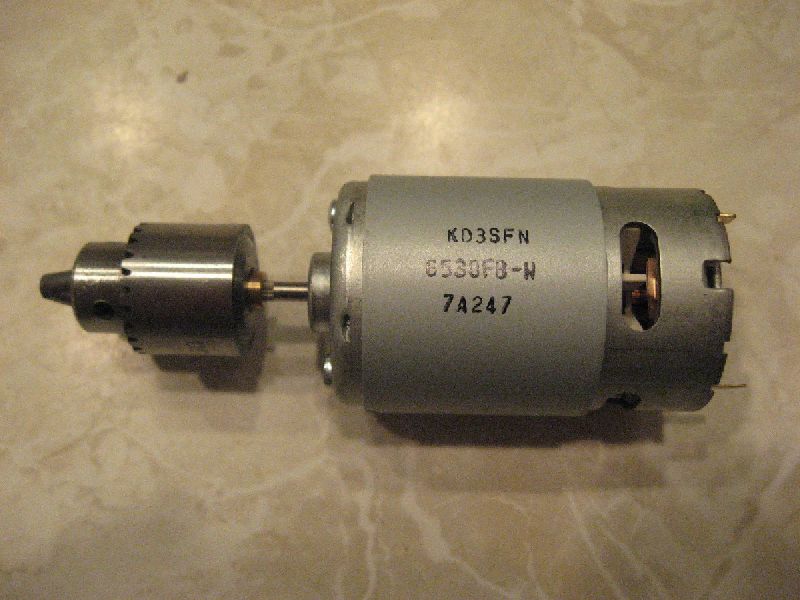
The first step was the procurement of a cutting bit, and then building the machine around that.  When I saw that the Home Hardware Building Center where I was employed sold Dremel bits, this was a very appealing option.  So I sourced a drill chuck that would hold a 1/8" drill bit, and bought an adapter that would go from the chuck's taper to a 3.17mm shaft.  With this, a standard 550 type motor could be used, which allows multiple options for motors.


With the drill chuck mounted on the motor, I jumped straight into designing an interface between the motor and the threaded rod.

The guide rods on the sides of the Z axis are not precision steel rods, so they have to be held in place via the cable clips to stay true.  The result would have been satisfactory, but there was a little wobble in the assembly.  A little research showed that professionals use a device called an anti-backlash nut to eliminate any play between a threaded rod and its payload.


The same combination of shower door rollers and steel rods is used everywhere in the machine, for all axes. The same design for anti-backlash nut is also used, although a slightly modified version had to be used on the X axis due to space constraints.

I included a picture with the calipers because I had no computer controlled tools at my disposal.  I had to measure with a tape measure, mark with a carpenter's pencil, and cut with a scroll saw, each and every piece of MDF, and a hacksaw for the steel parts.  The calipers show my dedication to accuracy with everything I do.  I am of the mindset that no matter what the job is, it needs to be done well.


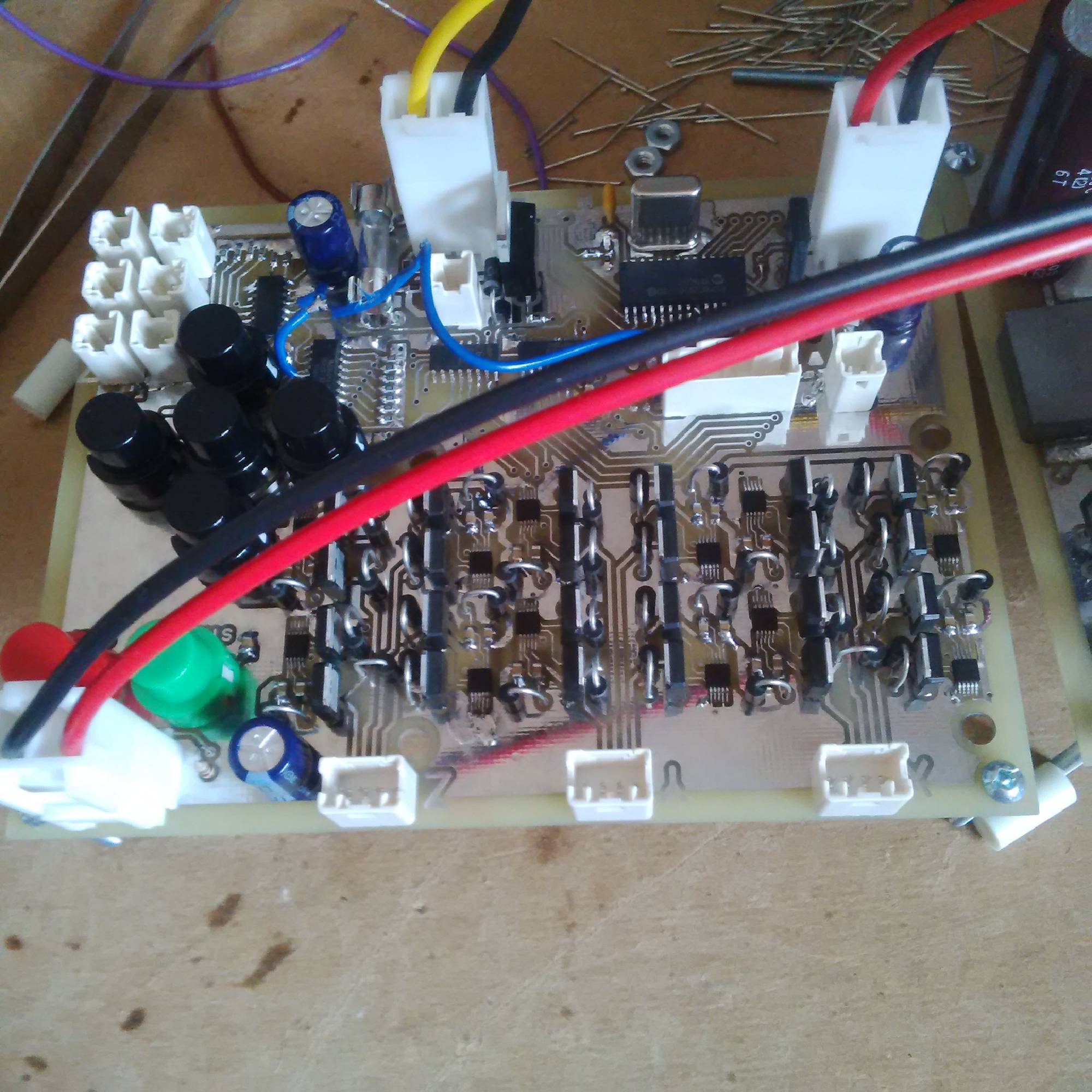
Designing the schematics, PCBs, and firmware is my true passion.  Sadly, I had to move before I could finish writing the G-code interpreter, but it's still capable, given coordinates in thousandths of an inch.

Oh and in case you're wondering, I always document everything in my lab logbook.

When I write it down, I can prove I did it; and if I did it, you can bet I wrote it down.